HEART 2026 International Symposium on

Highly Efficient Accelerators & Reconfigurable Technologies

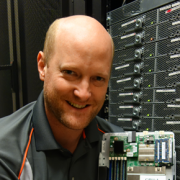
Andrew Putnam
Andrew Putnam

Partner General Manager, Cloud and AI Hardware Engineering, Microsoft

Keynote Title

Abstract

Over the past decade, accelerators – especially GPUs – have become central to hyperscale computing. Yet making individual kernels faster does not automatically make large, multi-tenant systems faster.

Drawing on more than ten years of running FPGAs continuously in production at Microsoft, this keynote reflects on what it actually takes to accelerate real cloud systems at global scale.

Looking forward, GPUs are indispensable – but not sufficient on their own. The next phase of hyperscale performance will depend on heterogeneous, data-centric hardware–software co-design and on engineering systems that can evolve in production for a decade or more.

Bio

Andrew Putnam is a Partner General Manager for Cloud and AI Hardware Engineering at Microsoft, where he leads programmable accelerator development across Azure’s hyperscale infrastructure.

He is the co-founder of Project Catapult and served as the architect and engineering leader for Azure Accelerated Networking (Azure Boost), enabling more than a 10× increase in production network bandwidth.

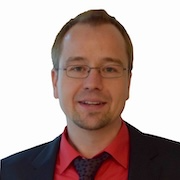
Tobias Kenter
Tobias Kenter

Scientific Advisor for FPGA Acceleration, Paderborn University, Paderborn Center for Parallel Computing (PC2)

Keynote Title

Abstract

A number of inherent architectural characteristics and developments over the last years have fueled hopes for FPGAs to play an increasing role in high-performance computing. Among these factors and trends are the fully customizable parallelism, flexible networking capabilities, power efficiency, the rise of high-level synthesis, and the arrival of FPGAs with HBM.

However, there are also challenges such as slow product cycles and unstable tool ecosystems compared to GPUs and CPUs. Also, lacking a rich stack of performance optimized libraries, programming and performance engineering for FPGAs remains challenging.

In this keynote, I will look at applications, scaling, and possible future directions for FPGAs in high-performance computing.

Bio

Tobias Kenter works as scientific advisor for FPGA acceleration at the Paderborn Center for Parallel Computing (PC2). He was involved in planning and operation of the FPGA accelerated supercomputers Noctua 2 and Otus, and in code development for these systems. His research interests include scientific simulations on FPGAs, productivity and portability through high-level synthesis tools, performance analysis and modeling, as well as multi-FPGA scaling via direct FPGA to FPGA communication.